
Life Worth Living: Building Resilience and Connection After Treatment
In this episode, alumna Erika and her mother, Jessica, share an honest look at the mental preparation and "transition plans" required to move from residential treatment back to home life. They discuss navigating social circles, rebuilding family trust, and how life a year later has become "whimsical" and full of hope.




Start Your Family’s Healing Journey. Ready to take the first step toward a deeper connection with your child? Learn more about our residential programs and support services by calling 855-667-9388 to speak with an admissions specialist.
Reunion After Treatment
Tiffany: Welcome back. I am so excited to hear what life has been like since you guys have been home, but let's first start with this: what was it like picking up your daughter? And Erika, what was it like being picked up after so long in treatment?
Jessica: Yeah.
Erika: Well, since I was a phase five, I'm an alumna, so I got to have a graduation. I think it was a really good way to end that chapter of my life. It was beautiful to reflect on my time there at the ranch, and I got to speak in front of everyone. I heard my parents speak and share their perspectives. My grandfather came out to be there for me, and my family was there. It was just like, "Okay, I know I'm ready to go home." It feels good to know that I am in a state where I can go home. I've been waiting and working towards this for a long time. I was just so excited and happy, and most of all, I was so proud of myself. I still am proud of myself because I really did come a long way.
Tiffany: Oh, you should be proud of yourself. That is a lot of work, and what a great way to celebrate it, too.
Jessica: Yeah.
Tiffany: Especially with your grandpa there.
Erika: Yeah.
Tiffany: How about for you, Mom?
Jessica: It was wonderful to share a graduation for her. I will say we all reached phase five.
Erika: Yeah.
Jessica: Right?
Tiffany: Yes.
Jessica: We worked...
Tiffany: It was a family effort.
Jessica: ...together, yes, to reach that. We felt it was really important to put a lid on top of the whole experience and cap it off by having the graduation. At that time, I wasn't sure how a true high school graduation would work out for her. This was such a big deal- to be away for a year and work on these things. Prior to being at the ranch, there were therapies and many experiences that came together to reach this point. The culmination of that and being able to celebrate her was fantastic.
Graduation at the ranch is a one-person thing. It isn't a ceremony for several people who happen to be ready at the same moment; it's a ceremony for one. That is so fantastic because the work and focus she put into herself deserves to have that attention. Certain people are asked to give speeches, and she gave a speech herself. It was all really awesome. We had all of her siblings and her grandpa there, except for one sibling who joined remotely because she had just had a baby.
Tiffany: Oh, yeah.
Erika: The baby was a newborn at that point.
Tiffany: Well, yes, I totally understand.
Jessica: A super newborn, like a couple of weeks old.
Tiffany: Oh, man, yeah- that would have been tough to travel.
Jessica: So-
Erika: She was a week old, actually.
Jessica: Yeah, she was a week old.
Tiffany: Oh, my goodness.
Jessica: So, that is what the graduation ended up being. It was a very high high.
Celebrating Milestones
Tiffany: I wanted to backtrack and talk about a few things that helped you guys prepare for this graduation and transition home. What were those things?
Jessica: When you first go to the ranch, you're really working towards that graduation all the way through.
Tiffany: That's true.
Jessica: And making it through every phase is what gets you to the end goal. For us and our family, we felt it was important that Erika had external motivation to continue what she was doing inside the ranch.
We felt our daughter was having a struggle reaching phase two of the program because of the initial drop-off and just thinking, "Oh great, I'm in another program." To get over that hurdle- getting over the initial "here is where you are, now let’s do some work"- we promised her that when she reached phase two, no matter when it was, we would come the very next weekend and bring her dog with us on the visit. We kept that promise. We did that all the way through the entire year, offering things that would help her feel motivated. We celebrated a birthday in a special way, we brought other family members with us, and we did side trips nearby. We would stay overnight in the vicinity of the ranch so we could see her for several days.
Tiffany: Yeah. I love that. A lot of times those touch points and visits can be testing grounds to see how you guys do as a family again and how you are functioning.
Jessica: And they are.
Tiffany: Yeah.
Jessica: That’s actually built into the program- to have visits home. When you reach certain phases, you get a visit home, and two of those visits were really bad. There were setbacks. There were problems.
Tiffany: Yeah.
Jessica: There were things uncovered after returning to the ranch. But as much as it’s a disappointment, it’s also an "okay, it’s a learning opportunity, and what are you going to do with it?"
Tiffany: Yeah.
Jessica: On both sides.
Tiffany: I see it differently than a setback. It’s telling, and it gives you information about where you guys are at and what needs to be worked on to move forward, right?
Incorporating Support Services
Tiffany: What about incorporating wraparound services before she transitioned home- what did that look like?
Jessica: We did that because of the need for eating recovery to still be part of her life. We needed to stabilize that outside of the ranch because she was leaving one community and going back into her former community. That was going to be difficult, knowing there are things you just feel again when you're back in the place you once came from. We had a very good rapport with her nutritionist, and early on- I would say four months or so before graduation- we started having the nutritionist become part of the sessions. That helped Erika, but it also helped her therapist, who didn't have that specific skill set in eating recovery. It helped to enhance the treatment.
Tiffany: Yeah.
Jessica: And we were very grateful that was a part of it.
Erika: And she also knew me pretty well. She knew my journey; I had been seeing her since I was 15.
Tiffany: Okay.
Erika: I was 17 at that point, so she knew my journey to a T.
Tiffany: Yeah. She knew what you needed-
Erika: She did.
Tiffany:- especially regarding your eating disorder.
Erika: Yes, she did, and that's what helped guide my therapist and guide me to continue moving forward.
Tiffany: Were there other things that you did to prepare to come home?
Mental Preparation for Home
Erika: I did a lot. I really prepared mentally because I knew I was going back to a space that was negative before. My room used to be a toxic place, but I was trying to get into the mindset of, "That’s where I go to bed, or where I go to hang out when I'm not feeling social," while still making an effort to be out of my room. I remember when I came home, I never closed my door. That just wasn't a thing for me anymore because I felt comfortable keeping it open. I also prepared myself for the fact that I would not have a very intense social life like I had before. I lost a lot of friends; I severed ties with bad friends I needed to let go, and I also had friends who let me go, which is okay. Friends come and go, but I had to prepare for that.
Jessica: I'd like to touch on that a little bit. It is about stepping back into a familiar place, yet it's unknown what it will be like. You reach out to friends and want the friendships, but it's not the same on their side anymore. How do you handle that? We were grappling with the feelings of loneliness, and from the parent side, I was feeling, "I don't want this to pull her back down."
Tiffany: Yeah.
Jessica: I wondered, "Where is this going to go?" Those old feelings of fear came back, but they didn't last long. I attribute that to our open communication and the trust that we built. To back that up, we had a transition plan. And...
Establishing a Transition Plan
Tiffany: Let's talk about that.
Jessica: The transition plan is something that I learned not every family does with their therapist. I read a couple of books that I wish I'd had access to way before going to Discovery Ranch, which provided information on what your child might be experiencing. I had already been through that, but what I gleaned from those books was preparation for coming home. How do you take your past experiences and the experiences you've had at the ranch and put them together to build a transition plan? You get a little bit of a sense of what that's like when you have the home visits. What is your schedule going to be like? You have to have some regimen to things.
Tiffany: What are the rules?
Jessica: Yes.
Tiffany: Yeah.
Jessica: What are the rules? What are the completely non-negotiables?
Tiffany: Yeah.
Jessica: What is unacceptable? What's okay? And then you color-code your friends. Who is a green friend, who is yellow, and who is absolutely red?
Tiffany: Yeah.
Jessica: I did use that term a couple of times with Erika: "Is that a red friend?" And she’s like, "Duh." She was just like...
Erika: I was over the treatment terms.
Jessica: The treatment language...
Erika: The therapy terms. Yeah.
Jessica: So I would then change that and say, "Is that someone you feel safe with? Is that someone you feel you can be okay around regarding your decisions?"
Erika: Yeah.
Jessica: And-
Erika: There were also a couple of times where I would think a friend was a green friend, and I would go hang out with them, but then I'd come home and be like, "Oh, I don't think I'm going to hang out with them anymore."
Tiffany: Yeah.
Erika: "I didn't really like it."
Jessica: And this is what trust is. When she would come home and say that to me, I didn't ask why. I didn't drill into her to "tell me the reasons."
Tiffany: Yeah.
Jessica: I am trusting that she made the judgment.
Tiffany: I love that.
Jessica: If she wanted to share with me, it was her choice to share.
Tiffany: It's a time where, as a parent, you kind of have to take a step back and say, "We have to let you fly out of the nest or swim past the coral reef and see how you do." Are you going to make the choice to stay safe and avoid the places you know you shouldn't go? That is hard.
Jessica: It is...
Tiffany: For both of you.
Jessica: I will also say it's dependent on the age of your child. If you've had a child seeking treatment at 13 and they're coming home at 15, it's different than a child who is 17 and almost ready to graduate...
Tiffany: Yeah.
Jessica: ...and go off to college.
Tiffany: That's true.
Jessica: There is the normal "I'm old enough, I'm 18, I'm going to college" mindset. Versus, we are still getting to know the new way of being together and working things through. Do we really trust each other?
Tiffany: Yeah.
Jessica: So there should be some tests of that. There should be some tests to see if that trust has been built.
Erika: That's why home visits are really good, I think.
Tiffany: Yeah.
Erika: Testing out the waters, seeing what needs to improve or change, being really open and communicating about that- testing the waters.
Tiffany: Yeah. What did it feel like for you to come back home?
Navigating Home Life Challenges
Erika: It felt really scary, and I was very anxious because I didn't want to mess up. I knew I had built this trust with my parents, and I was really scared to break it. I was also fearful of going back to that environment. When I went home, I went to a day program, and that was also really difficult. But as a family, we made the decision that I was in a place where I didn't need to do that day program anymore. That felt good- that they trusted me and knew I was doing well enough that I didn't need it. I was so happy that they recognized that, and I just thought, "Wow, I'm doing so good." And they see that. They see I'm doing good.
Tiffany: Yeah.
Erika: It wasn't like in the past where I’d say, "Mom and Dad, I'm fine. I'm fine," and they're like, "No, you're not." It was just very different.
Jessica: It was different because that day program was for eating recovery. It was at a different location, and the goal was just to make sure she was following good eating habits and staying consistent.
Erika: Just making sure...
Tiffany: Yeah.
Jessica: Yeah, making sure she was solid and ready to be home. But the program just kept pulling back to treating her for things she had already moved past. They didn't meet her where she was.
Tiffany: Okay. That makes sense.
Erika: It was like...
Jessica: She was already...
Erika: ...my first time going to treatment.
Tiffany: Oh, okay.
Erika: That's what they kind of treated it like.
Jessica: It was like day one. We had made her situation clear during intake and everything with this program. After about a week, I said, "Okay, we're going to give this another week."
Erika: It was two weeks total.
Jessica: Yeah, it was two weeks. They had a model there where we could come and share meals together. Having the experience we had, we looked at how things were and realized, "This isn't what Erika needs."
Tiffany: Yeah.
Jessica: We worked with her nutritionist and reached an agreement. Erika spoke one-on-one with the nutritionist, building that trust, and we were like, "Yeah, we're out of here."
Tiffany: Yeah, that makes sense.
Jessica: So we split.
Adjusting to New Routines
Tiffany: Was it hard to adjust back to home and school life, or how did that go for you?
Erika: Yeah, it was difficult. I continued to do online school, and it was hard to adjust because everyday life at the ranch is so busy. You're always on the go, always doing something, and always around people. You never really get time to yourself. You have roommates and you never have alone time. Then I went home, where I'm the only kid in the house, and I was just sitting there in the quiet thinking, "This quiet is uncomfortable. Why aren't there people screaming?"
I also didn't really know what to do with my days other than school. I was bored a lot, but that boredom sparked creativity. It made me try other things and really tested how well I was doing- and I was doing well. I stayed consistent and I didn't fall back into bad behaviors, but it was very difficult. I was sad a lot because I missed having a community where I knew I fit in; at home, I didn't really have a community. I did online school and was home most of the time, but I did have my best friend that I hung out with practically every day. So I had her.
Jessica: When she was around, yeah. There were some moments where she was low, and with the trust that we had built, I said to her explicitly, "I'm going to be the one to ask you the hard questions. That is the trust we have. So if it looks to me like something is going on, I'm going to ask you."
I remember a specific incident where we were sitting on the couch and I asked a question. Her response was a little defensive, and I said, "We agreed I'm your person and I'm allowed to ask these questions because of the trust we built." She paused, and then she answered- she remembered that. I would say that coming through all of this has really built her resilience and recognition. She knows how to step back, take a breath, and then address things. This kiddo is the best therapist in our family. It is pretty funny to hear therapy language now, and we can joke about some things that were not so easy to joke about in the past.
Building Family Connections
Tiffany: Yeah, I was actually going to ask you: what has changed with your home life or your family dynamics, whether for the better or regarding new challenges?
Erika: I definitely hang out with my family more. I am out of my room, talking with them and collaborating with them. I cook with them, play games-
Jessica: Yeah.
Erika:- and watch movies. I put more effort into being part of the family.
Jessica: It was refreshing that she mentioned she didn't shut her door anymore. I was used to her room being the place to find her, but it no longer was. Having the independence to let her go places without worrying about what she would be doing is great. Also, she is a master at card games. Do not even try.
Tiffany: Okay.
Jessica: Do not attempt.
Tiffany: Good to know!
Jessica: Yeah, she is so good at card games.
Erika: Another perk from treatment.
Tiffany: I bet!
Erika: There was nothing better to do.
Jessica: Games. I also think there's a newfound appreciation for fun and treats because those things are mostly removed when you're at the ranch. They're earned. Coming home and being able to do things, she would sometimes look at me with bright eyes and go, "I can do that?" and I’m like, "Yeah, you can do that."
Regarding the transition plan to come home- some things that a lot of families build in are random testing or measures to ensure past behaviors aren't happening in the future. Although I had things in the plan that were more rigid, like wake-up times and bedtimes, we found that the plan wasn't what we needed any longer. It's not that the plan fell apart; we just found a different rhythm.
Erika: Yeah. We made it more flexible.
Jessica: Totally.
Erika: I remember turning in my phone every night for the first few months. Then after a little bit, I asked, "Can I start keeping my phone in my room at night so I don't have to turn it in by 10:00?"
Jessica: And we were just like, "Yeah, okay." It was just like that.
Erika: That was a surprise. I was like, "Really?"
Jessica: Yeah. Phones are a big deal.
Tiffany: Yes, they are. Did you have to go through your phone before you came home?
Erika: The-
Jessica: Yeah, you went through your phone with Morgan.
Erika: Oh, yes. Yeah.
Tiffany: I was going to say, most of the time you do.
Jessica: Yes.
Erika: Yeah, with my therapist, I went through my phone. I cleared out bad things. I started new social media accounts and completely got rid of the old ones. On Snapchat, you have those memories, and I decided I didn't really want those. On my new account, I don't have anything negative that I can look back on. Getting rid of phone numbers or accounts for people I didn't want any interaction with at all really helped.
Tiffany: Yeah.
Erika: Those red-light friends.
Jessica: And this is where the honesty comes in. I know she did that, and I trust that she did that. I've had some visibility into her phone, and it is not out of sync with what she's telling me.
Tiffany: It matches up.
Jessica: Totally.
Tiffany: That's refreshing.
Jessica: Very.
Tiffany: I'm so proud. What tools or habits from Discovery Ranch South have helped you the most?
Tools for Personal Growth
Erika: I definitely learned more about myself and what helps me regulate. I learned that I love journaling, reading, writing, and meditating. I love yoga now, too.
Tiffany: Me too.
Erika: Yeah, yoga is great for you.
Tiffany: It really is.
Erika: It connects the mind and body.
Tiffany: It really does.
Erika: I learned that I can go to my mom for anything and everything. I think that is my biggest tool of all- that I got that trust back. It goes both ways, but...
Tiffany: You guys were able to repair that relationship?
Erika: Yeah, the relationship was definitely repaired, and I'm really happy about that. What other tools?
Jessica: I'm happy about that, too.
Tiffany: Let me ask you, Mom: what work have you continued since you guys have been at Discovery Ranch South?
Jessica: I think it's about listening and taking in what she's saying to me without already trying to decide what I'm going to say back or how to control the situation. Trusting the process means truly listening, and that is a practiced thing.
Tiffany: Yes.
Jessica: I feel like not enough people have that practice. It’s also just about being honest, calling out what I'm seeing, and not holding back. Especially now, she is a young adult in college. Just like we talked about, teenagers do what teenagers do and college students do what college students do. She wants to have freedom in the world, but she needs to do that with some control.
Tiffany: Yeah.
Jessica: You can't just run off to the mountains whenever you want to.
Tiffany: Like, "Why not, Mom?"
Jessica: Yeah, exactly.
Erika: Yeah, why not?
Jessica: She is a very free spirit who is ready to explore.
Tiffany: Yes. Tell us, where are you at now in life since you've been out of Discovery Ranch South?
Erika: My life has definitely gotten a lot more whimsical and blissful. I'm definitely a lot happier. I have so much passion for life, and I just have so many goals and things I want to do. I'm going to college and trying to figure out that route. I want to save up and travel, and I’m looking at more opportunities. I’m being more social, too. My social anxiety has gone down since I started college, and that’s helpful. I’ve been watching my baby niece grow up, and that is such a beautiful thing to witness.
I'm just so happy. I think every day about how far I've come and how glad I am that I’m not in that place where I was stuck for so long. I'm glad I'm not stuck there anymore because it’s going to make the rest of my life so much happier, more meaningful, and beautiful. I can't wait to see where I go.
Tiffany: Yeah, me too. I think you have quite a bright future ahead of you, and I'm excited to see where that takes you.
Erika: Thank you.
Tiffany: How about for you, Mom?
Jessica: So am I. When my daughter hit the one-year anniversary of her graduation from Discovery Ranch South, I was with her at her college. I entered her room and she was lying on the floor. As we spoke about earlier, sometimes the saturation of therapy feelings can be overwhelming, and she would lie on the floor to self-regulate. When I entered the room, I thought, "What is happening? What is happening that she needs to do this?" I was quiet and just stood there for a minute, and her words were, "I cannot believe how happy I am. It's a year later, and I can't believe how much I've accomplished." Wow. It was such proof that we've been through it, and I could not be happier.
Tiffany: I love that you guys both shared just how far you've come. Looking back a year later at how far your recovery has progressed and where you're at now- I love that you say life is whimsical and happier. I'm sure not every day has been happy; I'm sure there have been ups and downs. But at the...
Erika: One hundred percent.
Sharing Messages of Hope
Tiffany: Yeah. At the same time, to see how much you both have healed is incredible and hopefully gives our listeners a lot of hope.
Jessica: We hope that it does. We felt it was really important to share because there is a large lack of understanding about residential care and what it entails. We didn't know before we went into that situation, and having success with it and being able to move on in life successfully is a great story to be told.
I think what I would like to share is something related to what you were asking about- what I wish I would have known. At the beginning, in the midst of despair and a lack of hope, I had a friend say to me, "There's always hope." I knew that; it’s something I would say to people. But to really feel that and then see that it's true is remarkable.
Tiffany: I love that message of hope. It's hard to see it when you're in trauma, when you're in crisis, and when things feel so dark and heavy.
Erika: It's hard to see it because the darkness blinds you.
Tiffany: Absolutely.
Jessica: That's right. It's true.
Tiffany: What message do you want to leave with our listeners, both of you?
Jessica: I like the jellyfish.
Erika: Jellyfish.
Tiffany: Do it again. Let's make sure we get it.
Erika: Life is beautiful. Life is worth living. Go with the flow. Jellyfish.
Tiffany: I love it.
Jessica: I truly believe there's always hope, and I would just end with that. I'm also grateful for those who choose to have careers in this industry and how difficult that is. I'm truly grateful.
Tiffany: Thank you, guys. I'm grateful to be a small part of your story and your journey. I'm glad we could share this with listeners today, and I hope they feel the love, hope, and healing you guys have experienced by listening to this. Thank you both so much again for showing up, for being vulnerable, for being courageous, and for sharing your story.
Jessica: You're welcome.
Tiffany: Jellyfish.
Jessica: Thank you.
Erika: Jellyfish.
Final Thoughts for Parents
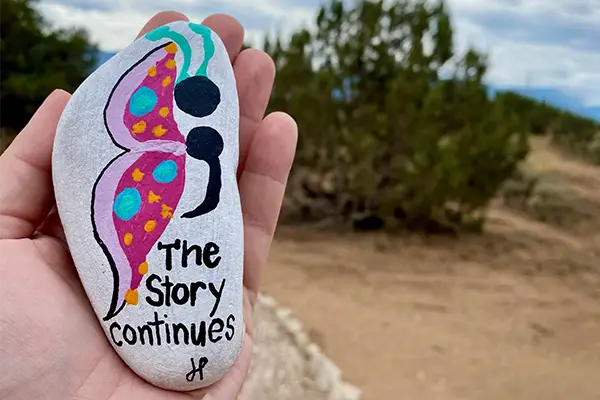
Tiffany: As we close out this series, I want to speak directly to the parents listening. If parts of this story felt familiar- if you felt overwhelmed, unsure, or afraid- you are not alone, and you are not failing your child by seeking help. Healing isn't quick or linear, but it is possible when families stay engaged and supported. Residential treatment is not the end of the story. It can be the beginning of a deeper connection, growth, and hope. Thank you for listening, for showing up, and for continuing to care for your child and yourself. There is hope, and healing is possible.