
More Than a Patient: A Daughter’s Journey to Reclaiming Her Joy
In this episode, Tiffany joins Jessica and her daughter, Erika, to discuss the emotional transition into residential treatment. Together, they explore how family involvement and experiential therapies provided the unique support needed to bypass verbal barriers and spark deep healing. Erika shares the specific moment her perspective shifted toward the future, offering a hopeful look at how grit, resilience, and parent-child partnership can lead to a successful recovery.
Real Stories, Real Healing
More Than a Patient: A Daughter’s Journey to Reclaiming Her Joy
Life Worth Living: Building Resilience and Connection After Treatment




Ready to take the next step toward your child’s recovery? Speak with one of our admissions professionals at 855-667-9388 to learn more about our specialized programs and find the right path for your family’s healing.
Introduction to Treatment Experience
Tiffany: Okay, welcome back, Jessica and Erika. Thank you guys again. Today we're going to be focusing on what it was like when you got to treatment. In our last episode, we learned what led up to it and that there was this big pivotal point of realizing, "we need more so my daughter doesn't relapse." Now we want our listeners to know what it was like once you made that decision to go into treatment.
So let's begin. What was your first impression of Discovery Ranch South?
Erika: My first impression...
Tiffany: Honest impression.
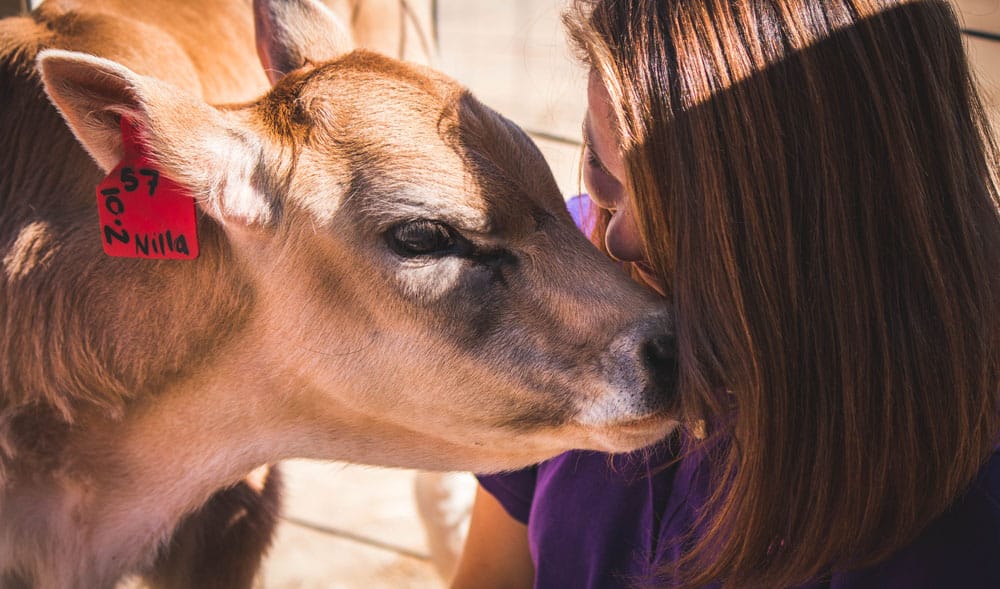
Erika: So, I'm thinking about my very first day. I remember it so clearly. I was just kind of like, "What is this?" I've never been to a treatment center like this one. It was definitely set up for a longer term than I've been to before. It was almost like a culture shock. It was all girls, and that was also different. I guess my first impression was that I thought the campus was beautiful. I really did. My first day was a rainy day, and rain is my favorite weather. I thought it was a beautiful campus. One of the very first things I did was meet my cow, and that was a beautiful experience. When I met my cow, I thought, "Okay, maybe this is doable."
Emotional Challenges of Drop-off
Tiffany: How about for you, Mom? What was it like the day you dropped off your daughter?
Jessica: There is so much that leads up to the moment that she is actually there. We had already decided she was going to go, but once she was there, we could finally leave her. I felt relief that we had brought her to a place where we knew she was going to get help. At the same time, I felt complete despair that I was leaving her there. It was the same feeling- it was good to take a breath knowing she would have this help, but then there was a lot of worry and sadness thinking, "How is she feeling about this? What is she experiencing?" She was obviously angry that we were bringing her to a place, but there was something interesting about having the opportunity to transport her ourselves through a long drive and then deliver her. We stayed overnight before taking her to the ranch, and there wasn't a risk of her fleeing.
Tiffany: I was going to ask-
Jessica: Yeah.
Tiffany:- how was the transportation?
Jessica: Her dad and I talked about whether she would be erratic enough to jump out of the car while it was moving. Thoughts like that come to mind because we couldn't predict her behavior, what she was feeling about going, or what she would do to prevent it. From a physical standpoint, she was willing. I am sure she had a lot of things in her own mind that she didn't even express verbally, but she was resolute. That is the overall feeling I received from her- just an "okay, I'll do it" kind of giving in. I definitely didn't like saying goodbye.
Tiffany: Were there moments of doubt for you in the decision? And if so, how did you work through those?
Jessica: I doubted every single day if it was going to be the right decision. And then I knew it was, every single day. It was just a roller coaster of asking: "Is it right? Yes, it's right. Is she going to be okay? Yeah, she'll be okay... or she might not be okay some days, but this is what we need for her to be okay overall." It was just a lot of back and forth in my own thinking.
Tiffany: How did you come to the point of "yes, this is right" and get through that?
Jessica: Even when I left her the day we dropped her off, I didn't have that feeling of "yeah, this is right." I didn't feel that until we started to receive information back. When I say information back, I don't mean the very first updates- and I can go into detail about that- but rather when I could see her again through the web-meetings with the therapist. Getting to see her and talk to her during our one-on-one time, there was a moment I knew it was the right thing.
Tiffany: Are you okay sharing that moment?
Jessica: First of all, being able to see her on camera after not seeing her for a number of days was good. But it was hearing her talk about what she was doing with her cow, that she had named the cow, and the activities she had participated in. Keep in mind, this wasn't a joyful delivery. She wasn't super excited to say-
Tiffany: Yeah.
Jessica:- "Yay." It wasn't excitement, but the fact that she was sharing...
Tiffany: She's shaking her head "no."
Erika: Nope.
Jessica: ...she was sharing back what was occurring. I thought, "Okay, this is going to gain traction- I know it." I knew how much she adores animals and loves the outdoors. Even though she had previously said she loves the outdoors, she told us when we took her to the ranch, "I don't like it outside. I don't want to be outside." She would say anything to show she didn't like it, but I knew her better than that, and I knew that it eventually would take hold.
Tiffany: That's awesome. You said you wanted to share a little more about the onboarding process and how they communicated with you. Go ahead.
Onboarding Process and Initial Adjustments
Jessica: A lot of the onboarding process requires paperwork- especially the history that needs to be told about a child who needs care like this. It is important that the details are there because it is going to be a new care team interacting with the child. As much information as can be provided is going to be beneficial.
Tiffany: Yeah. You want to be able to hand that off to them.
Jessica: Absolutely.
Tiffany: So that she can get the best support.
Jessica: It is like revisiting and timelining every single thing. When did something start? When did a behavior start? When did a treatment start? How many rounds of treatment? What is needed? Who is the "who" in all of that?
Tiffany: Yeah.
Jessica: That can feel very heavy because you are already making the decision to deliver the child, and then you have to go through all the detail of why.
Tiffany: You have to relive it.
Jessica: Reliving it was exceptionally difficult for me. Then you deliver that to an intake person at the ranch, and they take that, and then there are follow-on questions. It can feel a little frustrating to answer repeated questions because you have already provided the detail. It is not dissimilar to when you go to a doctor appointment and you have already filled out the paperwork, but they still ask you the same questions. It feels like that, and it can also feel disingenuous. It is hard to exercise patience, too, because there is a high level of emotion and anxiety. I had not had anxiety in my life, and it showed up when things with Erika started to show up. So...
Erika: Sorry.
Tiffany: That is fine.
Jessica: That is okay. Recognizing what it feels like, and knowing...
Tiffany: There is a good reason for anxiety. It keeps us safe. It is not necessarily a bad thing all the time.
Jessica: Yeah.
Tiffany: Yeah.
Jessica: But now we can all relate to Inside Out.
Tiffany: Yeah, exactly.
Jessica: When anxiety shows up, I was like, "Oh yeah, that is anxiety." But it also gave me something to relate to Erika with because it had not been present in my life before. Though it was for different reasons, it was still something to manage. Anyway, about coming into the ranch: there is the pre-work that you do, and then you deliver her, and you meet the therapist who comes in to basically do the handoff. I wasn't entirely comfortable with it. It was really hard.
Tiffany: What made it hard?
Jessica: We had a really good- and still have a good- relationship with her therapist and nutritionist. Her care team was really strong.
Erika: Outpatient.
Jessica: Outpatient care team.
Tiffany: In outpatient? Yeah.
Jessica: Yeah. Thank you. Her outpatient care team. I am still just so grateful that we found the right people.
Tiffany: Yeah.
Jessica: And how hard that can be for many.
Tiffany: So then having to trust someone new...
Jessica: Then having to trust someone new, and it is not the same.
Tiffany: Yeah.
Jessica: It was not even the same in how they presented themselves when they came into the room; it was a little jarring.
Tiffany: Yeah.
Jessica: So...
Tiffany: That makes sense.
Erika: Your child is being taken over by strangers.
Tiffany: Yeah. You really are taking a big leap of faith in handing your child over.
Jessica: It is true. And I feel that I would not have had as much trust or been okay to deliver her had I not done that many times previously.
Tiffany: Yeah.
Jessica: Because the very first time of doing that in any of the care is unnerving.
Tiffany: Yeah.
Jessica: You don't know where she is going, who has got her, or what she is doing. It is the child I have never left before, anywhere.
Tiffany: Is she okay? Is she safe?
Jessica: All the questions.
Tiffany: Yeah. So how was that communicated to you after she had been there for a bit?
Jessica: I appreciated that the intake person was able to communicate with me to let me know when she had settled into her place and what she would be doing in the next few hours. At the end of the day, I received a message and even some photographs of what had happened at the ranch and where she was. And... here we go.
Erika: Do you remember that first picture?
Jessica: I do remember the first picture.
Erika: I was holding a bottle for my cow, and I would not let them take a picture of me without doing the middle finger. So they scribbled it out and sent it to my mom.
Tiffany: I am sorry, I shouldn't laugh at that, but that is pretty funny.
Erika: It was funny.
Tiffany: It is very funny.
Jessica: It was very much my daughter- the gesture, her humor. To me it was funny. It wasn't like an act of defiance or being blatant about something. But yet, here I am. This is where I am and I am just going to show-
Tiffany: Take me or leave me.
Jessica:- show you all, yes.
Community Dynamics and Peer Interactions
Tiffany: Oh, man. So what was the hardest adjustment for you, Erika?
Erika: The hardest adjustment... the community was extremely different than the ones I had been to before. The treatment facilities I had been to previously were absolutely "no touch." But at this one, you could hug your peers or hug staff- appropriate touch.
Tiffany: Yeah.
Erika: That was different. I really liked that because I thought, "Okay, good. I can hug someone because I don't have my mom."
Tiffany: Yeah, you need that.
Erika: I do need that. I guess the hardest adjustment was doing so much in my day; the schedule is packed. You are constantly doing something. That was a hard adjustment from the treatment center I went to before, because they wouldn't let you stand for more than five minutes. You couldn't do- I couldn't walk around so much.
Tiffany: Yeah.
Erika: Or else I would get in trouble. I napped most of the day. My body was exhausted from introducing more nutrients and having a feeding tube. So, adjusting to the day-to-day schedule was really difficult. And meeting new people, too. It is always a scary part because in a treatment community, when a new person comes in, everyone knows about it. It is like, "New person! Okay, we're excited! Who is it going to be? What are they going to look like? What is their name?"
Tiffany: Yeah.
Erika: All the things.
Tiffany: What trouble are they going to cause?
Erika: I know. Are they going to be a good kid, or are they going to be a bad kid?
Jessica: What is their story? Why are they here?
Erika: Yeah.
Jessica: All the curiosities that they all know about.
Erika: And it is a new person. New people are always a focus in that community because you are away from society. So everyone is like vultures. New person!
Jessica: I will say it is interesting; the first time we went to drop her off, as parents, we walked around with her in the community. We were in the area where they serve the meals, so the other residents were there.
Erika: I saw them walk in for the first time...
Jessica: We saw them, and they all saw us.
Erika: All the heads turned.
Jessica: All the heads turn, everyone looks, and it is to be expected.
Tiffany: Yeah.
Jessica: But I can imagine, for many, it would feel a little strange. Like, why are they all staring at us?
Tiffany: Yeah.
Jessica: There was one individual who immediately approached my daughter and introduced herself. That person is still present in our lives, and we joke about that moment.
Erika: One of my closest friends to this day.
Tiffany: Really?
Erika: Yes. I love her so much.
Jessica: We will always remember you because you were the first one to enter.
Erika: Yeah, I still see her sometimes.
Tiffany: That is so awesome.
Jessica: There are some scary things that come from peer interactions at the ranch, and again, they are things we had shared before. What are they going to learn and pick up? What is my daughter going to learn from others that might not be what I want her to learn?
Tiffany: Sure.
Jessica: What are some behaviors that we don't want to perpetuate?
Safety and Emotional Well-being
Tiffany: Yes. This question is for both of you. Did you feel that you were emotionally and physically safe? And that goes for you, too- did you feel like your daughter was safe?
Erika: For the most part, I did feel emotionally and physically safe. Sometimes I was scared, but I knew that most of the staff was great and were trained to protect me. At the same time, I was still scared. I felt safer as time went on, but there were certain moments throughout my journey where there was a certain out-of-control individual.
Tiffany: You mean in regards to the other girls at the program?
Erika: Yes.
Tiffany: Okay. Maybe acting out physically, emotionally, or being unsafe?
Erika: Yes.
Tiffany: In regards to their behavior? Okay.
Erika: Never a staff member.
Jessica: Here is a place where I would say past experience with treatment centers helped me, because I fully expected that in phone calls home, I would hear, "This isn't where I need to be. I need to come home." I think it is important for parents to know this ahead of time. You are going to hear these things from your child. It is actually in the packet from DRS that says you are going to hear your child say these things, almost verbatim.
Tiffany: It is funny how, as a kid, you think, "Oh, this is new. No one has ever heard this before." But I could write a book of all the things you guys have said over the last 10 years. None of this is new.
Erika: Every single facility I have been to, I would call my parents and say, "This isn't right."
Tiffany: Yeah.
Erika: "You guys need to take me out."
Tiffany: Yeah- "I don't belong."
Erika: "I need to come home." Yeah.
Tiffany: Yeah.
Erika: Every single one.
Tiffany: I think you could admit this, but as a daughter and a child- even when I was a kid- we know what emotional heartstrings to tug on. We know what emotional bombs to throw at our parents to make them hit that panic button, right?
Erika: Oh yeah!
Jessica: There is also the matter of receiving that from her and keeping my response controlled. I tried not to give advice. I would listen, and then if I felt it was something that needed addressing, I would do that with the therapist.
Tiffany: Great advice.
Jessica: There were a number of situations where I learned details that I would bring up, because it was concerning to me as a parent. That was my avenue to address it. I wanted to understand the situation better and make sure my child was truly safe. Of course, everyone's perspective of situations and scenarios is going to be slightly different, but even knowing that, I wouldn't dismiss what I was hearing from my child.
Tiffany: I love that because you can still validate your child, right? Whether you know if it is true or not doesn't matter. You can still validate: "Yes, you feel uncomfortable, you feel unsafe, or something is going on that you're not okay with." Then, if it is concerning enough, instead of making it a big deal with them, you go to the therapist and say, "Hey, can we look into this?" That is your right as a parent to ask, "Is my daughter safe? Is there more to the situation? Are you aware of this? If so, how are you handling it?" As a therapist who has worked at a residential treatment center, it is good to hear those things. Maybe we did miss something, or maybe we know exactly what is going on and can tell you the rest of the story. That kind of open communication and involvement is key to making sure your child's treatment is safe and moving in the right direction.
Jessica: Agreed. I also take into consideration the staff working there and all they deal with each day.
Tiffany: Yeah.
Jessica: It is a very intense place to work. I wouldn't want to approach any of them in an attacking manner; I would want to offer information and find out more detail. If I felt my feedback wasn't met with some kind of resolution or information back- reciprocity is a big thing. If I give something, I want something back from the ranch or the therapist to know my child is safe. There are other avenues to take to escalate things, but that wasn't really necessary most of the time. It happened maybe a couple of times because I felt I wasn't getting enough information.
Tiffany: Yeah.
Jessica: Again, I think that is a right of a parent. I also know that my daughter was in a phased program, and in each phase, you need to experience certain things to graduate to the next one. The first phase is learning how things are done in that environment and getting level-set on where you are as a person seeking treatment. Then there are the therapy assignments to get to the next phase. There were some setbacks and times when she would move up a phase and then get bumped back down. That is all a learning process. And let's remember, these are teenagers with normal teenager behaviors.
Tiffany: Exactly. Thank you. Amen.
Jessica: Yes. Yet, in a place with rules, they have to abide by them, and there are consequences. I appreciate that, because in a normal home environment, there would be consequences for poor choices. There needs to be consequences. I found a much different daughter from phase one all the way to phase four through the growth she had along the way. By the time she had been there for four months, I felt there was very little movement, and I was becoming concerned. Then, we had something pivotal happen in our family. It was very special to my daughter, and it helped her want to throttle forward with her healing and "being a good person," as she termed it. She wanted to live life and move on, and that escalated into a skyrocket of positivity.
She started doing more work toward her goals. Unfortunately, with the calendar year and the way holidays fall, we got bumped by the holiday season. Her time at the ranch was extended a little bit longer than she was ready for, but it was worth it because we all got to participate in a graduation. What an amazing experience that was.
The Importance of Parental/Family Involvement
Tiffany: I bet. I love that you talked about that turning point. I want to hear about that turning point from you, but I also want to touch on how involved you were as a parent and as a family. You aren't going to know if your child is safe or if they are progressing if you are not involved- if you aren't doing your own therapy, doing your work, communicating, and asking questions. If there are concerns, ask and talk. "Clear is kind"-I love that saying. To the parents listening, this has come up on other podcasts: it is so important that you are as much a part of the process as your child is. You don't just send your child away and hope they get fixed; you stay involved, 110%, to help them get better and to fix yourself as well. That is so key.
Jessica: It is very much key. It isn't just the delivery of a child, and that's it-where you go home and live your life while your child is healed in some magical way. Especially if family and having a relationship with your child are important, there must be work on both sides. It cannot be one-sided. One can come away from the program healed at their level, but if they return to a family or parental situation they aren't prepared for because the parents weren't along for the journey, it won't work.
Tiffany: Yeah.
Jessica: So, what did that look like for us? We met every week with the therapist and with our daughter. We would also have some time at the end of those sessions for just one-on-one time between us and our daughter. It was really important for both parents to be present for those sessions. We were given homework, tasks, and things to work on, just like our daughter. She had things she needed to do to meet the requirements for her phases. I enjoyed understanding what was needed in each phase so I could meet those needs from my side if necessary. I feel that there are times when it can feel taxing, like...
Tiffany: I'm sure.
Jessica: ...it's a lot. Every week. Our daughter felt it too; she would come into the room and sometimes just lay on the floor because she was completely "therapied out." Enough therapy, enough interaction, enough groups- just enough. You reached a point where you just couldn't do it, so you'd lay on the floor.
Erika: That is called treatment fatigue.
Tiffany: Exactly.
Erika: I got that really fast.
Jessica: It is, and it is fair to say that. There were times I would advocate for her and say, "It's okay, let's let her take a break." Sometimes she would stay out of the room. I think Erika self-regulates well by laying on the floor.
Erika: I love the floor. There is actually a picture of me during a group at a parent seminar where I'm just sprawled out on the ground. I needed that time.
Tiffany: You've got a great sense of humor.
Erika: Oh, thank you.
Jessica: She does. Seeing that sense of humor return and seeing the joy- it was like, "Yes! There she is!"
Tiffany: There is our daughter.
Jessica: There she is. Regarding the realization that treatment was needed, we talked about her checking out- being in her room, and just wanting to sleep. It was a pure loss of joy.
Tiffany: Yeah.
Jessica: The joy wasn't there. When you have a child who has always been filled with energy and joy, and then it goes missing? Regardless of "teenager stuff," I just knew something was not right.
Tiffany: Yeah. Trusting that mother instinct.
Jessica: A hundred percent.
Erika: Yeah, because I was always wild. I was always all over the place. I was always just, "ahhh!"
Jessica: Yeah. So when we started to get glimpses of her old self, those glimpses became closer together and more common. Her self returned, but it was a self with more self-awareness and understanding. Her grandfather also became part of this journey with her.
Tiffany: Oh, awesome.
Jessica: It was amazing. He wrote her letters and made them so they were for both of us. He shared things I didn't even know about his own childhood.
Tiffany: Really?
Jessica: Understanding that was a great example for both of us. He shared experiences like, "Hey, humans go through stuff, and you can come through this." They were building her resilience. Through the relationship they formed, her grandfather even came to her graduation at the ranch.
Tiffany: That's so cool.
Jessica: It was amazing. He got to see where she had been.
Erika: Yeah. Did you want me to talk about the turning point?
Tiffany: Yes, I do.
Erika: Yeah. I... mom...
Tiffany: I was just letting your mom finish.
Erika: I know.
Jessica: There is so much to say.
Erika: I know.
Tiffany: So much. Well, let me ask you two-let's do two questions for you. You can decide which one you want to do first.
Erika: Okay.
Turning Point in Recovery
Tiffany: How did you cope with discomfort and challenges, and also, what was your turning point like?
Erika: Okay, I will start with the turning point. I can remember- not the exact date, but the exact moment- when I shifted. I was at school at the ranch, and I got a five-minute phone call with my family. I was like, "Oh, is there something going on?" It was special permission to have that call. My sister told me she was pregnant, and I was just so overjoyed. I have always wanted her to be a mother, and I knew it was going to happen one day. I was just excited to find out when. It just... a big thing for me is that I want to be an aunt to my niece. I want to be a good person. I want to be an example. I don't want to be a story that my sister tells her about; I want to be there.
It made me think about my life and my childhood. Then it made me think about how I want to be a mom someday and have kids of my own. The way I was going, that would have never happened. I thought, "Okay, it's time to change things." That is where I recognize things started to skyrocket. I really put my all into myself. At first, I thought, "Okay, I am doing this for my niece. I'm doing this for my mom. I'm doing this for other people." At that point in my recovery, I couldn't do it for myself yet- if I had said I was doing it for myself, I wouldn't have done it. But then I got to the point where I realized, "Okay, I'm doing this for myself, for my happiness, for my peace, and for my future." Things just got so much better.
Tiffany: I think that is the hardest part as a parent watching our kids go through recovery, especially from big mental health challenges, because we can't decide that for you.
Erika: Yeah.
Tiffany: You have to decide for yourself eventually: are you going to do this for yourself? What is going to be that turning point and motivation? We can provide the support, the tools, the people, and everything else, but ultimately, you have to choose.
Erika: Yeah. It is a choice that you have to make, and it is a really hard decision to make.
Tiffany: Yeah.
Erika: Especially with the mindset you are in.
Tiffany: It is a brave choice to make, too, because you have to go do new things. It is easy to stay stuck in negative patterns because you know what those are.
Erika: Yeah. That darkness can become a comfort because, at some point, it was an escape and a comfort for you. It is hard to leave that comfort space. I would say that was like my "ED voice"- that is where I found comfort. That is where I could escape from outside things and just focus on that, which is not a healthy thing.
Tiffany: Yeah.
The Healing Power of Animals & Being Outdoors
Erika: And having to get out of your comfort zone. That is the point of life. You are not going to go anywhere if you don't get out of your comfort zone. So that is what I had to learn. In dealing with the discomfort at first, because things were such a struggle, I used very unhealthy coping skills. Then, a big thing that I used to cope at the ranch was my cow- or both my cows.
Tiffany: I need to know your cow's name.
Erika: Okay. My first cow...
Tiffany: What was your cow's name?
Erika: My first cow was named Jellyfish.
Tiffany: Oh my gosh, I love it. Of course.
Erika: Yeah, "Jelly" for short. I called her my "Smelly Jelly." I love her so much. And then my second one was "Peep." He was my little Peep.
Tiffany: I like your brain. It is a good brain.
Erika: Thank you.
Tiffany: You've got great creativity.
Erika: I loved my cows. Sometimes you could ask a staff member if you could walk to the cows and just hang out with them for a little bit. That is what helped me. I really connect with animals because I didn't have to say any words. I could just sit there and hug my cow. I could watch them and try to figure out what they were thinking about. They're not thinking about much- they're cows.
Tiffany: You don't know that. I'm just kidding.
Erika: "Ooh, food. Ooh, that's my mom." Yeah, I was their mother.
Tiffany: Yeah.
Jessica: They equated you to food.
Erika: Yeah. Jelly would get excited when I'd go see her. She had little curls on the top of her head, and I thought, "That's my cow- she has curls."
Tiffany: Of course.
Erika: Yeah. Animals were a huge thing. And also my horse; his name was Jasper. He is the sweetest horse. His spirit and what I felt from him reminded me of my grandfather and the letters he wrote to me. Hanging out with my horse didn't require any words for it to be a therapy session. I could just go and brush his hair. I could look him in the eyes- he actually had one blind eye. I could just look at him and find so much comfort. He was a great horse.
Jessica: I think some of the things learned with animals involve seeing their behavior, especially with the horses and their protection of one another. There was a mare there for a time, maybe once or twice...
Erika: A baby horse.
Jessica: The mother horse.
Erika: Oh yeah.
Jessica: And Jasper would protect-
Erika: Maple.
Jessica: -Maple.
Erika: They were best friends. Jasper would protect Maple while she was pregnant.
Jessica: It was interesting to watch their behavior. The equine director there also had a degree in psychology and was able to help with therapy that way, which was fantastic.
Erika: Shout out to Lee.
Jessica: Shout out to Lee.
Erika: We can say that, right?
Tiffany: Oh yeah, Lee is great. We have had Lee on the podcast before.
Erika: You have?
Tiffany: Yes.
Erika: Yeah, Lee is great.
Jessica: We'll have to listen. Shout out to Lee and... oh gosh...
Erika: Destiny.
Jessica: There were so many I was thinking about today on our way here...
Erika: Dave- that...
Tiffany: Talk to us about Dave.
Erika: Oh, yeah...
Tiffany: What does Dave do?
Erika: Dave is the REC director, along with Laura. I'm not sure if Laura is still at the ranch. But Dave and Laura ran the REC program, and I loved it because we would go on hikes and climbs, we'd rappel, and we'd go swimming sometimes. I got really close with Dave. He was a big support person. He taught me so much about the outdoors and about myself. He is one of the funniest human beings. I enjoyed talking to him and messing with him; we would mess with each other. And his dog, Kramer- I love Kramer. For some reason, he's a certified service animal. I don't know, because one time when I was crying on the floor, he totally stepped on me to get to his ball. He's a therapy dog? Is he?
Tiffany: He's a dog.
Erika: He's a dog. He's Kramer.
Tiffany: Dogs will be dogs.
Erika: But that REC program made all the difference. That was one of my favorite parts about the ranch; it helped me in so many ways. It helped rebuild my strength, it helped rebuild my passion for the outdoors, and it taught me more about what I want to do with my life. It taught me more about myself and who I want to be.
Tiffany: I love it. I love the animals you talked about and I love the outdoors. I think that is what makes Discovery Ranch so special. Personally, as a therapist, I have a bias toward the experiential. I love getting out of the office because it allows therapy to go to such a deeper level and hit home more than just talking about things. You learn so much more about yourself with animals because they are so accepting. They are just so much easier than humans.
Erika: They love you no matter what.
Tiffany: Yeah, unconditional love.
Erika: No matter what you've been through or who you are.
Tiffany: Horses mirror you. They're magical. They really are healing, beautiful creatures. And the outdoors itself- I could go on forever about how amazing that stuff is. That is a really powerful part of the ranch.
Programs That Allow for Personal Growth
Jessica: I agree. I will go back to the question of why we chose the ranch and what took us there. The programs they had were encouraging to us because the location is on a ranch. I mentioned that we like the outdoors, but they also have the opportunity to do recreation or performing arts. Seeing music, dance, and performative art as part of the program, and seeing how that connects with so many people, was important. Even my daughter, with her dance background, was able to do a little bit of both. Although she went into the REC program and did the trips and activities specifically for recreation, she was also able to do some performative art.
Tiffany: That is so cool.
Jessica: Like dancing, and how fulfilling that was for her.
Erika: At the parent shows, I did dance solos.
Tiffany: Oh, wow.
Erika: I would count that toward my senior solo, which I missed out on in my normal life back home. Getting to do that at the ranch gave my dance life closure, and that helps.
Tiffany: I love it.
Jessica: It does. I think that also speaks to the staff working there who have the talent, skill, and knowledge to teach. What a joy it was to be able to see that senior solo and really label it as such.
Tiffany: Oh, I bet.
Jessica: And really label it that.
Erika: I also did a duet dance with the dance teacher who was there at the time.
Tiffany: No way. That is so cool.
Erika: Yeah, it was a lot of fun.
Advice for Newcomers & Looking Ahead
Tiffany: I bet. To end our episode, I would love to hear from you, Erika. What would you tell a new girl starting her first week?
Erika: I would tell a new girl that, first of all, everything is going to be okay. Everything happens for a reason. This is going to be the hardest thing you will probably ever have to do, because you are going to have to find yourself. You are going to learn who you are, where you want to go, and how to treat yourself better- and your family better- but most importantly, yourself. That plays a part in rebuilding your relationship with your family. I think that is important in most cases, but also, go with the flow. Everything happens for a reason. Be like a jellyfish, stay positive, and don't let others bring you down. They will try, but you have to ignore them. Even if you feel like you have no friends, it is better that way because you are there to focus on yourself, not other people.
Tiffany: I love it. I just keep seeing Dory singing "just keep swimming" as you talk.
Erika: Exactly. Just keep swimming.
Tiffany: Hopping over the jellyfish. You just give off that "go with the flow" vibe, like Crush. I just can't stop thinking about that.
Erika: That is a compliment.
Tiffany: I really appreciate you sharing your journey and what it was like through treatment, because it is not easy. It takes a lot of courage to share all these things with our listeners. Is there anything else, Mom, before we end that you would like to add? Okay.
Thank you guys so much for talking today. In our next episode, we are going to be talking about what life is like after treatment, because your journey doesn't end there. It is a whole new journey that you start, and there are going to be ups and downs along the way. I am excited to hear what your journey has been like since you have been home and to share that with our listeners. So stay tuned. Thank you.
Jessica: Thank you.
Erika: Thank you.