
From Hiding to Healing: A Mother and Daughter’s Path from Crisis to Treatment
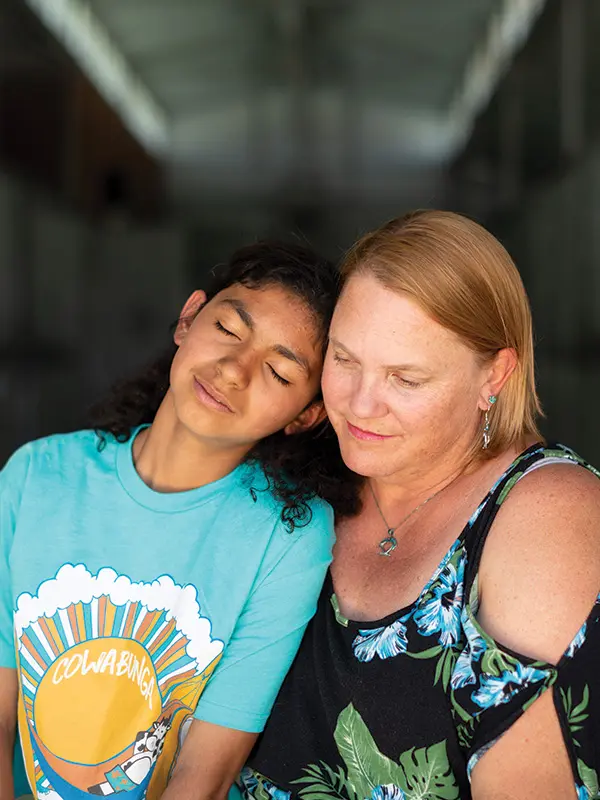
In this episode, Tiffany sits down with mother-daughter duo Becky and Katie to discuss the raw reality of the "breaking point" that led them to residential treatment. They explore the subtle red flags of addiction and the unique cultural pressures of an affluent community that often keep families silent. By sharing their path from "micro-lies" to a collaborative decision to seek help, they offer a roadmap for parents navigating the transition from crisis to healing. Tune in to learn how choosing to "extend your parental capabilities" can ultimately save your child’s life.
Real Stories, Real Healing
Reclaiming the Narrative: Building a Life of Purpose After Treatment




Take the Next Step Toward Healing. If your family is in crisis and you don’t know where to turn, help is available. Call us today at 855-667-9388 to learn more about how we can support your journey.
Introduction to the Series
Tiffany: Welcome to our mini-series, Beyond the Breaking Point: Healing the Whole Family. I'm Tiffany Silva Herlin, a licensed clinical social worker. Today, we are beginning a three-part series that follows one family's journey through residential treatment at Discovery Ranch South. This conversation is for parents who are asking themselves, "Is outpatient enough?" and wondering what the next step might look like. Through Becky and Katie's story, we hope to offer clarity, compassion, and hope. Please remember that this podcast is not a substitute for therapy. Always consult a licensed mental health professional regarding your family-specific needs. Let's dive in.
Becky and Katie, thank you so much for joining us. I am so excited for our listeners to hear your story today; it is an honor to be able to talk to both of you. Can you start by telling us a little bit about yourselves?
Katie: Yeah. I'm Katie. I come from a divorced family, and I struggled with general mental health, behavioral issues, and addiction from about the age of 13 until I was 16.
Becky: My name is Becky, and I am Katie's mom. Originally, we were a very small family of three. We are now in a co-parenting situation with Katie. My family lives out of state, so we didn't have a large support system around us. That created a lot of challenges, because you really do need a support system when raising a child.
Family’s Challenges of Co-Parenting & Divorce
Tiffany: You mentioned you are a co-parenting family. Were your parents together when you were going through some of your initial struggles, or while you were at Discovery Ranch South?
Katie: My struggles really started right after they got divorced, which was between the ages of 12 and 13. They were still figuring out co-parenting as I was entering the Ranch. Once I was there, they focused on my treatment a lot more than their own relational issues. Then, once I came out and became stable again, they started finding their boundaries within co-parenting.
Tiffany: As someone who co-parents my two older girls from a previous marriage, I have a lot of respect for parents who can do that. It is not an easy task for parents to come together and show up for their child, especially when there are other things going on. I think it is so great that your parents have been able to figure that out - hats off to them. That is not an easy task at all.
Becky: From my perspective, it was a very difficult decision to divorce. One thing my daughter was very adamant about was that the divorce wasn't a factor. She kept a very strong front for both of us. I'm not sure if that was something she felt she needed to do to protect us, or to avoid blaming the divorce for her mental health issues. As a parent, you think a lot about your child when you decide to separate. During the treatment and the struggles, I was very hard on myself, wondering if I did the right thing or if the divorce was a big contributing factor. I do think it was a factor, but not the entire factor. There were other things going on, but as a parent, you want to put all that blame on yourself.
Tiffany: Absolutely. Having been in a similar situation, you worry about how it is going to affect them. You take on a lot of that guilt and shame, wondering if you messed things up for your child. I think many parents, whether they're divorced or not, feel so much guilt when they have to place their child into treatment.
Katie: I think parents hyper-analyze every aspect of their life to see what caused it. While it can be environmental, a lot of the time it has always been inside the kid and is just slowly released as they grow up. That was definitely a huge part of my mom's thought process because the divorce had just recently happened when I was going through my struggles.
But for me, it was honestly a relief that that stage of our family was over. Living as a "broken family" together is different than being separated and figuring things out that way. I would have taken this over the broken family any day. It feels worse having them together, arguing all the time and never finding a balance, than it does in this situation as co-parents. I know for sure that I was happier in this situation; it just took some time to get used to it. Now that I am, it’s a lot easier. It makes sense - it feels like what my family was supposed to do.
Tiffany: I think that's an incredibly mature perspective, and it sounds like you've done a lot of work to get there. I'm excited to hear more about that. Do you have anything to add, Becky? I want to make sure you get a chance.
Environmental Influences & Cultural Stigma
Becky: I would add that these situations are complex and multidimensional. One single event does not trigger this type of escalating behavior. As Katie mentioned, environment played a role. When she was in kindergarten, we chose to move to a small, affluent community for first grade, thinking it would be a healthy social environment for her. In retrospect, while that move had some benefits, it also created pressure for her to live a certain lifestyle or keep up with her peers. We weren't always able to do that. I think the environment she grew up in - from grade school through middle school - was a factor in how she felt and how her coping strategies developed.
Katie: The culture in the community where I grew up was very hushed. Issues like mental health and substance abuse were sheltered and pushed under the rug because parents really cared about their reputations. Many of them owned businesses and needed to maintain that image to provide an income. That culture made hiding things feel like the norm, which continued the pattern. However, part of me is very grateful for where I grew up because it was so safe. It was the kind of place where you could walk home from school or sports after dark without worry; everything was within walking distance. There were also great job opportunities for students, and I made lifelong friends there.
Tiffany: I love that you can both see now - even if you couldn't then - that it wasn't just the divorce, or just your mom, or just the environment. There were many contributing dynamics, yet you can still find the silver lining in it all. As a therapist, I can tell you've both done so much work and experienced so much growth. It is amazing to see.
Motivation to Share Their Story
Tiffany: I want to take one step back, if that's okay. Why did you guys want to come on here and tell your story? Because you just mentioned that you come from an affluent environment that doesn't talk about these things. So why do you want to talk about it now?
Katie: I think for me... I really admire my story and the ambition that I have put into my life. Especially comparing it to a lot of people that I went to treatment with, I can step back and be so grateful for the situations I continue to put myself in. I know it's so helpful for girls who are in programs right now, and girls coming right out of programs, to hear more success stories than the "normal statistics" or the average. It's so important to be able to see beyond yourself and realize, "Okay, there is this potential. I'm not just doomed for the rest of my life." Even if I feel better and more stable, there is that fear that the "statistic" says I'm not going to turn out good, or I'm not going to get a good education. So hearing from people who actually gritted their teeth and tried to get through it is so important. I think I would be doing a disservice to myself and the people around me if I didn't take the chance to show people that there is hope. There is life after treatment and after this stage of life.
Tiffany: I love it.
Becky: For me, I really want to try to destigmatize these programs. The only things you tend to hear about are the stories that are negative, and we have a positive story to tell. I'm very proud of my daughter, and I want to share that with people. In a community like ours, I want to talk about how proud I am - there are no secrets here. My motivation is to try to demystify and destigmatize these programs, and also give people a glimpse into what can be done if you take a step forward and take action to help your child, versus sweeping it under the rug. Nobody gets healthy that way.
Tiffany: Yeah, exactly. When we don't talk about these things, I think people worry that talking about it is going to cause more people to have issues. It's actually just the opposite. The more we can talk about this and educate people, the more we can see those red flags sooner. The more people can feel safe to raise their hand and say, "I'm struggling." Instead of being worried about your reputation or how people are going to judge you, it's: "No, this is safe. I need to talk about this. I need help. Our family needs help." And that is normal. Everyone has mental health issues at some point in their life.
Honestly, maybe I'm a little biased because I'm a therapist, but everyone should get some therapy at some point in their life - including therapists. I love that you guys are willing to come here today and share your story, because it's a vulnerable thing and it takes a lot of courage. Especially when the stories that get the most attention are the negative ones that are "hyped" or glamorized. For every one of those, there are hundreds of amazing success stories like your own that I wish more people could hear. So thank you for showing up today, really. It's an honor to be able to provide a platform for you to share your story.
Confronting the Signs of Struggling
Tiffany: So let's start with when you first noticed... well, I’m going to start with you, Becky. When did you notice that your daughter was struggling? What were some of the signs?
Becky: Some of the signs were that she would self-isolate in her room. Friends would come over, but she definitely kept them separate. There were things where my intuition was telling me that something was going on. One of the mantras I always have with my daughter is, "Lying is the problem." I’d tell her, "I love you. You can do anything, but just don’t lie to me. Let’s try to stay truthful." Because I knew in my gut when she was lying, but I wanted to believe we had a pact of never lying, I believed her for a lot longer than I should have. I felt a little gullible at times.
To give a tangible example: she started burning incense in her room and got into crystals and sage. Every teen tries on different personalities to see what fits, so I assumed that’s what she was doing. But then, when I thought I smelled marijuana- or even vaping, which was more of a problem, honestly- I confronted her. I said, "I think you’re burning incense to hide other smells." She was very convincing at the time and made me question myself. I was questioning myself rather than trusting my gut. That was just one example of where small changes in her behavior started to get my attention. All of this happened through COVID, which was another contributing factor. She couldn't socialize, so it was really hard to discern if it was COVID or if she really wasn't able to socialize in a healthy way. It started with those micro-lies that just got bigger and bigger.
Tiffany: How about for you, Katie? Did you realize you were struggling at this time?
Katie: I think I started realizing I was struggling a couple of weeks into when school started saying, "Oh, we're just off for two weeks," and then postponing it another week. I started realizing I was struggling pretty bad and just didn't have motivation for anything. Small mental health issues that I had never really cared to prioritize started getting magnified. It felt like it was starting to control my life. As I stopped seeing people and caved in on myself, I realized these things were taking over and I couldn't get them out of my head like I used to. When I was in person, I could tell myself, "Okay, I'm with my friends," or "I'm in class - go away, don't bother me right now."
A huge part of that was also magnified when I was on some ADHD medication that wasn't benefiting me. I'd take it in the morning and be this medication zombie all day. I wouldn't care about anything; I was just there doing my thing. Then I'd come home, the medication would wear off, and my whole life would come back. I’d only let that happen for a couple of hours before putting myself to bed because I just couldn't handle it anymore.
Tiffany: So it sounds like the isolation of COVID and those existing mental health issues started getting bigger. Then, other factors like the divorce really made you realize you weren't okay.
Katie: Yeah. And I knew that so many people online were talking about mental health issues during COVID, but the people actually around me- my friends- seemed okay. They were all happy; they were fine. I’d rather fit in with the people I could hang out with in person than people talking to me online. That’s when I tried to hide it and just be like, "No, everybody else is okay - I should be fine."
As I continued to push it down and it got worse, I started cycling through friends really fast. I was always trying to find new friends because I felt like I wasn't fitting in with the ones I was with. That’s how the drug abuse started. Those kinds of people were the ones who really wanted me around, and I felt included. It’s a classic addiction sign - nobody wants to use by themselves; they want someone there to justify it with them. Those were the friends I started getting attached to. I realized drugs could be a coping mechanism and thought, "This can make me feel better because it's making other people feel better." I was gaining friends from it, and I felt like I was silencing what was in my head.
Tiffany: You just explained a textbook, classic example. You don't feel like you fit in, so you find a group that accepts all the people who don't quite fit in. You have this community, and on top of that, you're self-medicating, which makes you feel better. There’s a dopamine cycle going on, but not in a positive way. Becky, do you have anything to add?
Parent-Child Dynamics During Crisis
Becky: I do, because when you are watching from a parental perspective, you’re seeing it happen. You're asking the questions, but your child isn't seeing it. They feel like you are intruding on a positive community cycle. That’s where it started getting really confrontational between us, because I was trying to help her see things she was blind to.
The other thing that occurred in that timeframe- and maybe it's too early to talk about this- was that at the tail end of COVID, when things were getting really tough between us, I was diagnosed with breast cancer. In what I saw happen, I think she got very scared, but what she was showing me was absolute defiance. Even on the day of my surgery, I came home and she just would not... before going into surgery, I had said, "Could you, for today, just stick around the house?" My sister had come into town to help care for me, and I just asked, "Could you really stick around? I don't have the physical or mental capacity to worry about you being away from the house, today of all days."
I'd love to hear her perspective on this, but she just left the house. I was struggling so much just to recover at home, and that was the moment where I realized: if she can't do this one thing for me under these circumstances, it's beyond what I am capable of convincing her or having her see. That was the time I realized, "Oh no, we really need to work on this - something's really hard." My sister was there, too, so I had another adult perspective from someone who had raised three children, and she was so upset on my behalf. I just said, "I can't take it, so just go - if you're going to go." To Katie, that was permission. When I said, "Fine, just go," she thought, "Okay, I have permission," while for me, it was saying I couldn't handle it anymore.
Katie: For me, that was definitely toward the end before I went off to treatment. At that point, I was just so deep in the hole of genuine, hard drug abuse. When I think back on it, I can barely remember it - the memory there is very faint - but even thinking back, I can't find the reason I was telling myself it was okay at the time. It just tells me a lot about that period; I was so hypnotized by the state of life I was in that there was no reasoning with me. There was nothing you could say or do that would get me to act like a normal human being. It was "my way or the highway" because that’s what mattered to me. Nobody else mattered. It was about what made me happy and what was going to keep the cycle going of keeping my mind quiet.
Tiffany: That's real addiction, right? It's when you get to a point where it's your world, and you don't care about the relationships or the outcomes. Your mom is getting surgery for breast cancer, which is a huge deal, and yet you're not willing to stick around because it doesn't benefit you. That is addiction. That's when you know you've got a serious problem affecting the closest relationships in your life.
Mom, I just want to give you some recognition for what an amazing mother you are. Hearing you tell this story, it sounds like you had so much love for her. You said you felt gullible, but I would argue that you were a mom who loves her daughter, who wanted to give her the benefit of the doubt and wanted to trust. It makes sense that when you are going through the serious trauma of breast cancer and your daughter isn't willing to stick around, that would be a breaking point. You realized, "This is above me. I no longer have the skillset or the support to manage what's happening." A lot of parents listening get to that point. They may blame themselves, but the reality is they are loving parents who no longer have what they need to support their child. That’s when you have to start seeking other help, which is scary.
Becky: Exactly. It was a series of serendipitous events. Without that moment, I wouldn't have reached the point where you realize, "Either I’m going to give up and let my daughter do whatever she wants," or I take action. Some parents decide it’s just a "phase." People like to liken things to phases, but I knew my daughter well enough to know that with her personality type, even if this started as a phase, it was not going to end well. She gets hyper-fixated on things. I realized I didn't have the skills, but I was not going to give up. I have one daughter - one and done. I have a lot of time and energy to ensure she ends up on a healthy path to adulthood.
That’s when I approached her. We had a discussion- whether she remembers it or not- and it may have been argumentative with a lot of raised voices. After that happened in May, she said, "I'm moving out." She was packing her stuff. Instead of me saying, "Absolutely not, there is no way you're moving out," I said, "Okay, where are you moving to? Let's make sure it's a healthy place where you feel safe." That was how I opened the door to having her be a part of the decision. She mentioned moving in with the parents of a friend who was part of the group she was using with. I said, "I'm pretty sure those parents are not ready for another child." I think she got confirmation that there was really nowhere for her to go, and maybe that’s why she was open to a real discussion about what to do next.
Tiffany: Your mom mentioned that you were part of the decision and realized you needed help. Can you tell our listeners about that? Because that's not very common. I love that you got to that point. If parents can get their kids to that point, it’s a miracle. The children who choose to come are going to do so much better in treatment. Help our listeners understand - how did you get there?
Empowering Youth in Treatment Choices
Katie: Yeah, it was definitely a "Hail Mary" situation. I had packed so many bags and I was ready to leave. I didn't want input from my parents about where I was going; I just wanted to leave and figure it out on my own. That was definitely not a choice or a doorway they were giving me. I don't perfectly remember the time between finally getting me to put my bags away and when we got on the phone with the ED consultant. We did multiple sessions and talked about a lot of different situations. I remember almost feeling like it was a challenge - like, "Oh, you want to send me away? Okay, I get to pick where I'm getting sent, and I'm going to make it as easy as I can for myself."
Tiffany: Okay.
Katie: I think subconsciously, I knew I had been in the exact same loop for almost three years at that point. I think I was getting really bored. I wanted to do something new and try something else. That was why I was so open to being part of the process. I know I have major control issues - most people going through addiction do, because it's the only thing they can grab onto when the rest of their life is like a hurricane.
So, I sat down with the ED consultant for three or four sessions. After that, we talked about the places they thought would be good for me. The first one was an IOP (Intensive Outpatient) or a PHP (Partial Hospitalization). I was honest and said, "That’s not going to help me." If I’m coming home at night or on the weekends, it's the same situation. I’m sleeping at home and seeing the same people. I was able to admit that to both my parents and the consultant.
The second option was [an RTC] near home. They usually asked kids to go home over the weekend so they could clean the facility. Again, that was the same situation. Then we got to wilderness therapy. That was a hard conversation because it would have been good for me, and part of it sounded like fun to go camping for three months. But after realizing the reality of how much addiction I had been through at such a young age, we had to admit my body genuinely wouldn't have survived it. Usually, wilderness is a great solution because it’s the hardest "restart" you can go through, but it wasn't something we were going to do.
Then Discovery Ranch South (DRS) came up. It didn't sound as bad. It was a facility away from home where I’d sleep there, and the pictures looked like my old summer camps. We flew out to Cedar City for a tour. I liked the people and the facility was really nice. The girl who gave me the tour was really sweet; she felt like a friend from home, not just someone forced to give a tour.
Tiffany: Genuine.
Katie: Very genuine. We were laughing and talking about real stuff. I’m also a huge animal person - animals have a special place in my heart. The idea of being around livestock and raising cows was incredible. That tour was on a Tuesday. We flew home, and I just "Hail Mary-ed" it. I said, "Okay, let's do it." I packed my bag, said goodbye, and was there by Friday.
Tiffany: Wow. What a unique story. I love that your defiance and need for control actually benefited you. It's good for parents to hear that if your child seeks control, giving them buy-in can really pay off.
Katie: Yeah. As manipulative as it might sound, if parents can take advantage of those struggles, it helps a lot. I’ve lived with girls and talked to people who were brought to treatment by a transportation service. Being able to choose where you are going can 100% help someone’s treatment. For parents working through this, it is so important to work with someone to get your kid there without it being forceful. Just softly approach it. Make it appealing. Ask, "Is this something you would want to do? If not, show me some other places you would want to go."
Becky: We fast-forwarded to how we got into treatment, and I think parents might want to hear a little bit more about some of the signs that, as a parent, I was watching and seeing. It does help that I've had a good relationship with my daughter the entire time. There was safety for her with me, I believe, and that’s part of what helped this happen.
There were just a few other moments that I want to mention that happened over the summer. She does ride horses; she's a hunter-jumper and she's very good at it. I always thought if I could keep her involved in a healthy outlet, that would help. There was another moment when she was showing at a show that she wanted to go to very desperately. I agreed, and we went. But when she stopped being able to focus on something she loved, like riding, and she allowed her drug habit and - I’m going to bring it up - the promiscuity, which is very common in girls, that type of behavior on the borderline... that was where it got me very scared.
We were at a horse show, and she was doing both edibles - because I found some and thought they were candy - as well as just hanging out with some of the young men that were working the show, dragging the arena and working with horses. She wasn't even able to stay focused on the healthy things that she really enjoyed. I'm not sure if that was a moment my daughter remembers the same way, because there was a big span of time where she was so deep in it, but that was the summer just before going into the program.
Those months we were talking with what Katie called an ED consultant - an education consultant - in order to help guide us through this process. You don't have to have one to guide you; I'm sure there are many resources that are free, but for us, it was the route we ended up going. It was the acceleration of her behavior; it wasn't just once a month something would happen, it started happening all the time. When she started not doing the things that she loved, and those things were starting to suffer, those were the signs to me that this was not something she was controlling at all.
Tiffany: Yeah.
Becky: I think she would usually pick riding horses over anything, but when she started taking risks on the one leverage point I had - "If you do this, there’s no horse show" - I knew. One week I even rode the horse myself, which probably made her angrier than not getting to ride, seeing her mother on the horse butchering the ride completely! Anyway, I want to emphasize: if your child is no longer enjoying the things that once brought them joy, that is a red flag you cannot ignore.
Tiffany: That is a great point. If they no longer have the desire for things that were once a high priority, or if they are taking risks that cause them to lose those privileges, it’s a major sign. I want to ask: did she try outpatient before you sought out an educational consultant?
Therapeutic Approaches Explored
Becky: I wanted to bring this up. We did outpatient therapy for two full years with at least two different therapists. I feel like- and Katie can tell you more- she was just "calling it in." She was going through the motions and not touching on what was really bothering her. She focused on surface issues, like complaining about boyfriends or social interactions; it was never really about her. I don't think she was taking it seriously.
We also did family therapy even before the divorce. We tried outpatient options, but my impression was that they weren't enough. I was seeing a therapist, she was seeing her own, and her dad was seeing one. We were all trying our best. We even tried to see a therapist all together, but that didn't work out. Sometimes you just run out of options.
Katie: Yeah. I remember starting with an individual therapist. I loved the environment- the property was nice and they had horses- but I don't think I understood it all the way. I was so used to bottling up genuine, hard emotions that I didn't know what I was supposed to talk about. I just talked about things that bothered me daily, like, "Oh, my friend did this and it made me mad," or arguments I had with my parents. I didn't know how to tap into that "fountain" of unhealthy stuff.
A therapist will say, "This is a safe space; talk about whatever you want," but as someone just starting out, I was like, "I don't know what to talk about. What am I supposed to get into?" Eventually, we moved to a different therapist. I saw her once or twice a week and did group therapy once a week. I didn't connect with that therapist at all, so then I didn't want to talk about anything.
In group therapy, I felt like I couldn't connect with anyone's issues. A lot of people were in hard financial situations- not having food on the table, or parents never being home because they were working, so the kids had to care for younger siblings. Other kids had disorder-related mental health issues that I couldn't relate to because I didn't have them. I felt like I didn't belong there. I’d just sit there and say, "Okay." I felt like a "special case" because, on paper, I shouldn't have anything to complain about. My parents got divorced, but it was the easiest divorce I've ever seen; it wasn't messy. I felt like I couldn't complain in front of those people. I worried I’d be perceived as ungrateful. That’s when I started giving up on therapy. I didn't feel connected to the therapist or the group, and I just didn't want to deal with it anymore.
Becky: I’ll add real quick- now that we’re talking about it, things are coming back to me. We started with Cognitive Behavioral Therapy (CBT); that was the first place with the horses. We thought putting a "buffer" like an animal between the person and the therapy would be good. When CBT wasn't working, we tried Dialectical Behavior Therapy (DBT). We thought a more prescriptive, action-oriented approach would help. We did that for almost a year. I got some value out of it, but we realized it wasn't getting us anywhere either. The therapist you didn't connect with, Katie, was the DBT therapist.
Katie: Yeah.
Becky: And that was all remote- it was all virtual.
Tiffany: Oh yeah. That's so hard.
Becky: You cannot discount the massive difference between in-person modalities and virtual.
Katie: Yeah.
Tiffany: I agree. Trying to connect, especially with a teenager, has to be done in person. It’s okay to go virtual once the connection is there, but in-person makes such a big difference. At your age, everything is online, so it’s easy to be like, "Yeah, I’m here," but you’re not really here.
Katie: When you do stuff in person nowadays, you stand out. Online, you're doing everything the same way you always do. If you're there in person, you make a mark on somebody.
Tiffany: Exactly. And we should talk about how outpatient is incredibly beneficial, yet it has limitations. As an outpatient therapist, you only know what your client tells you. Sometimes they don't tell you everything. It’s hard to know where to challenge them and hold them accountable while still making sure they come back. There are so many variables outside of the office that you don't have control over. It makes it a challenge when you are facing issues as big as yours were.
Katie: Exactly.
Role of Educational Consultants in Treatment
Tiffany: It sounds like you really tried to exhaust every resource available to you, which is an important step. You don't want to just jump straight to residential treatment. Can you inform our listeners - we've mentioned this a lot - what exactly is an educational consultant, and how can someone find one if they are seeking treatment?
Becky: An educational consultant is typically a paid service that offers a consultative approach to understanding the treatment environment. There are just so many choices out there. They get to know your child and your family through multiple interviews to understand the challenges, then they identify programs that might fit your needs and present you with options.
When I was trying to figure out the steps after outpatient, I did a lot of my own research and ended up finding out that the wife of a good friend and colleague was an educational consultant. She had become one because she’d had to put one of her own children through a program, and she wanted to help other families. It is not an inexpensive proposition. I’ve since learned that if you are fully engaged, you could probably find the same resources yourself, but we felt like we were running out of time. We needed someone to help us reduce the timeline. These consultants have often visited and observed the programs in person. They take all the data- the statistics and the stories we mentioned earlier- and help balance that information. If you are just a "layman" parent trying to learn about this industry, it can be pretty scary. You have to ensure you have a balanced perspective from a non-biased source. I think of educational consultants as that non-biased bridge to help match your child’s needs with a program. That is how we found DRS.
Katie: I also think it's super important to mention that if an ED consultant isn't within reach- whether because of your area or your financial situation- most kids are in public schools. It is so important to reach out to your school or the therapist your kid is already seeing about these resources. Every school has a mental health sector nowadays. It’s important to talk to them because they have teachers who watch your kid all day. Going through those steps with them is vital to taking away those "blockade" variables.
Tiffany: Becky, you did a great job explaining what an educational consultant does and how amazing they can be to help navigate an overwhelming industry, especially when you’re in crisis. And Katie, you mentioned a great point too; if you can't afford one, you can still find ways to find these programs and get help for your child. I love both of those perspectives.
As we wrap up this episode, you guys have told an amazing story of where things started, how you found Discovery Ranch South, and the resources you tried along the way.
Choosing Out-of-State Treatment Programs
Tiffany: I just have a few last questions for you. What made you choose an out-of-state program versus something in-state?
Becky: We live in Washington state. If you live in a state that allows for these types of programs, you have more local options, but we didn't really have that in our state. When we were given choices by the consultant, they were mostly out-of-state. One was in Hawaii, and I was very much on board with that one!
Katie: I didn't know about that one.
Tiffany: Yes, please!
Becky: No, but in all seriousness, it wasn't really an option for our state. Once the consultant came back with some options, we took one of those. Honestly, as we talk in a future episode about everything that has occurred within our family, it will be interesting to hear how the program in Utah really set Katie on a broader path to where she is today. It was almost predestined that we ended up in Utah; it’s such a beautiful state. We are outdoorsy people, so it was the right choice. We didn't know it at the time, but we feel a greater being figured it out for us and helped us find this program.
Katie: From my side, as the kid in the situation, every state has different regulations regarding treatment centers- what’s allowed and what isn’t. I think it is so important to pick a state that is strict about access. In some states, if a kid runs away, the staff can’t go after them or do anything. States like Utah and Montana should be looked at because they have the kinds of laws and regulations that can save a kid’s life. They have policies that ensure the staff can make sure a kid doesn't run away or hurt themselves or others.
Tiffany: They make sure they're safe.
Katie: Exactly. It is so important to look at those regulations because those policies will change the course of how treatment goes. As much as some policies may seem strict or like they are crossing boundaries, I would rather someone pick a place that will go above and beyond than somewhere that has to take a "hands-off" approach because of the laws. It’s important to have more protection rather than less, whether it seems invasive or not. I'm grateful now that there were regulations saying they could make sure I didn't run away. Picking a program in a state that can actually help your kid is the most important thing.
Tiffany: I love that. I think it’s really scary to send your child out of state, and it’s hard to leave your home as a child. What were some of your biggest fears- Mom, regarding sending your daughter away, and Katie, regarding leaving?
Becky: For me, my biggest fear was that she would never forgive me or that she would resent me. Even though she was part of the choice, it still hurts to have her away. At a certain point, the kids start questioning how hard the work is.
Tiffany: Yep, even if they chose it.
Becky: And at that point, you- the parent- are the target. The safest and closest person is typically the target. I was scared my daughter would be very angry with me long-term.
Tiffany: That makes perfect sense. It’s very typical to worry if they'll be angry, if they'll ever talk to you again, or if they know you still love them. How about for you, Katie?
Katie: I was very scared of what my life would look like after this. Nobody around me had ever done anything even close to this. The people who were as bad as I was were still at home just doing what they do with no plans to change. I didn't have anyone to look at as an example, so I wondered what was going to happen. I was scared that my life was going on "pause" for the next year- that I was missing a year of my sports and school. Once I got into the program, school became less scary, but I was also worried that when I came home, I would have no friends. I wondered if fixing my mental health would be enough of a benefit to cover the "damages" caused by me leaving for a year.
Tiffany: It’s a huge sacrifice to ask a teenager to step away from their friends, their school, and everything they know to start over. There’s a big gap and a sense of limbo that you step into. You have to take a step of faith to save yourself and have a better future, and there’s no guarantee because you have to make the choice to do the work.
Katie: Yep.
Tiffany: Yeah.
The Parental Perspective on Treatment Decisions
Katie: I think the biggest thing I would say to parents is this: it is really scary to send your kid away, and it is really scary to deal with your kid's reaction, but 10 out of 10 times, you are saving your child's life. It is so important to do your part in saving your kid's life and leave the ball in their court by saying, "Okay, now it's up to you to want to save your life or not." When kids go to treatment, maybe five or seven times out of 10, they will find that will to change.
It's so important that parents take their step so they can pass the ball to the kid. When a kid is in addiction or drowning in their mental health, they can't even reach the ball at that point. They’re stuck. If you need encouragement as a parent to take that leap of faith, just find someone on the internet to talk to- a parent or a child who has a similar story. I guarantee if you message them and say, "This is what I'm struggling with and I don't know what to do; I think I need to send my kid to treatment, but I'm scared," they will message you back in a heartbeat and say, "Do it. This is so important." It's scary and it's heartbreaking, but you are saving your child's life.
Tiffany: I don't know if I have anything to add to that, because it was so incredibly powerful. It honestly made me emotional to hear from your own mouth that it saved your life. As hard as it was to step away from your friends, your community, and even your parents, it was the best thing your parents could have done. I think parents don't always realize that, ultimately, their child will feel the love in that huge sacrifice. When you've tried every resource and used all your skills and it’s just not enough...
Katie: Yeah.
Tiffany: ...and your child's life is at risk, this is the next best thing, even if it's the hardest thing.
Katie: Yeah. And it's okay to admit that you can't fix something as a parent. It's okay to admit that you are out of control and you can't fix your child. It doesn't mean you're a bad parent or that you missed a step in the parenting book. It just means that child has used their free will to go to a place where you can’t help them. Never feel like it's a bad thing that you can't help your kid. There are so many people who won't admit they are out of control.
Tiffany: Absolutely. Ultimately, it’s your child's choice to want to change. You can set up the resources and give them what they need, but they have to decide to take it and run with it. Becky, what would you tell parents who are listening?
Becky: I would say that the guilt is real, but your self-talk can help you realize that when you don't have control or a specific skill, you need to reach for help. As Katie mentioned, your children have free will; you can only shepherd or guide them, but you can’t make their decisions. You can create parameters to help them try to make the best choices, but they are outside of your view for many hours of the day. They have to be able to make good choices on their own. Again, the guilt is real, but instead of guilt, you should think: "This is the best parenting option I have right now." You aren't "outsourcing" your parenting; you are extending your capabilities as a parent.
Tiffany: You're asking a team to step in and help, right? You're asking for support. It’s like you’re holding a big boulder, trying to move it up a hill, and it's not going anywhere. You’re realizing you can’t do it on your own. You aren’t giving up the boulder; you’re asking people to step behind you and help push.
Looking Ahead: The Journey Through Treatment
Tiffany: I have loved hearing your story up to this point. Thank you for coming on and sharing what led you up to treatment. That is a vulnerable, hard story to tell and it takes a lot of courage. It's been an honor, and I'm excited for our next episode to hear what it was like once you actually entered treatment- because from what I hear, you thought it was only going to be a few months!
Katie: Yep.
Tiffany: In our next episode, we’ll be talking about what actually happens when your child arrives at treatment and how families survive the early days. Thank you guys for your honesty and openness. I'm excited to continue this journey with you.
Katie: Yeah. Thank you.
Becky: Thank you.